June marks CPR and AED Awareness Month, a crucial reminder of the lifesaving skills that can make a significant difference in emergencies. According to the American Heart Association, more than 350,000 out-of-hospital cardiac arrests occur every year. In these critical moments, the readiness of bystanders to act can be the difference between life and death.
A Culture of Preparedness at Quest
At Quest, Inc., we serve over 500 individuals daily across 20 locations in Orlando and Tampa. The safety of the individuals we support with developmental disabilities is our top priority. Every Quest employee undergoes CPR training, regardless of their location or position. Possessing knowledge in basic life support skills is vital, given the unique health needs of the individuals we serve. Many of them have developmental disabilities that may be associated with heart defects or challenges related to eating, increasing their risk of choking.
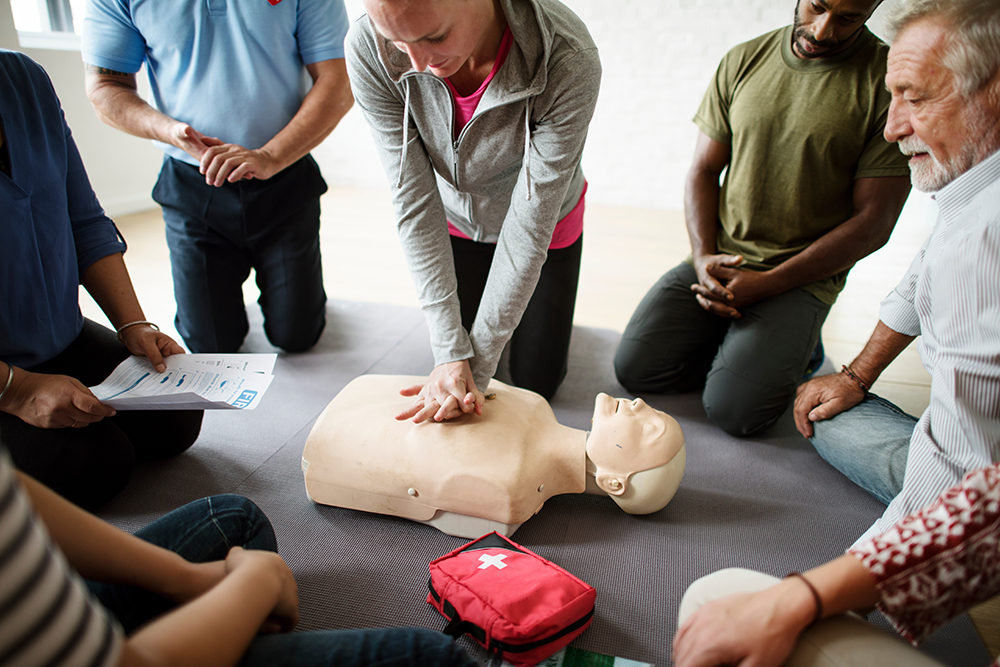
Quest’s Nurse Educator, Sheryl Stakebake, has taught our CPR classes for the past two years. She emphasizes how learning CPR equips individuals with the skills to respond effectively in crises, fostering a culture of preparedness.
“When we teach the skills, and people can see how to implement them, they begin to gain muscle memory,” Sheryl says. “CPR is not something to be afraid of; it’s something to feel confident in once you learn to do it correctly.”
The Impact of Training on Emergency Outcomes
In alignment with best practices, staff members renew their CPR certification every two years to stay current on the latest techniques. Many of Quest’s staff have expressed gratitude for knowing how to help someone in an emergency and some have successfully applied their training in real-life situations.
“It’s so important that our clients are safe. You may think you never need to use it, but having the training in your background can truly save a life,” Sheryl says. “Studies show that most often you will use CPR on someone you know, so everyone should make an effort to receive and renew training.”
The value of CPR training extends beyond Quest; it benefits the entire community. We encourage everyone to seek out CPR training. Take the first step toward preparedness — find a CPR class near you at www.heart.org/findacourse. Remember, every second counts — immediate CPR can double the chances of survival.
Essential CPR and AED Techniques
Understanding the Goal of CPR
The goal of CPR is to get oxygenated blood to the vital organs, including the brain. Effective CPR can help prevent permanent brain damage while saving a life.
Steps to Perform CPR Effectively:
1. Check the scene and the person: Ensure the area is safe and see if the person is unresponsive.
2. Call for help: Dial 911 or your local emergency number; if available, send someone to retrieve an AED.
3. Start chest compressions: Push hard and fast in the center of the chest at a rate of 100-120 compressions per minute.
4. Allow complete chest recoil: Let the chest rise completely after each compression to optimize blood flow.
5. Perform rescue breaths (if trained): After every 30 compressions, give two rescue breaths, ensuring the airway is clear.
6. Continue CPR until help arrives or the person shows signs of life.
Understanding the Use of an AED
An Automated External Defibrillator (AED) should be utilized as soon as possible. It assesses heart rhythm and can deliver an electric shock if necessary to restore a healthy heartbeat.
Steps to Use an AED Effectively:
1. Follow AED prompts: Turn on the AED and listen closely to the voice instructions provided.
2. Remove clothes and attach pads: Before applying the AED pads, remove any covering and ensure the chest is dry. Place one pad on the upper right side of the chest and the other on the lower left side of the chest, a few inches below the left armpit.
3. If necessary, plug the pad connector cable into the AED.
4. Prepare to let the AED analyze the heart’s rhythm: Ensure no one is touching the person. Say, “CLEAR!” in a loud, commanding voice.
5. Deliver a shock if the AED determines one is needed: Repeat step four before pushing the “shock” button to deliver the shock.
6. Continue CPR: After the AED delivers a shock, if no additional shock is required, keep performing CPR, beginning with compressions.
Together, let’s spread awareness and empower our community to learn the proper training techniques. By investing in these skills, we can enhance safety for everyone and make a profound difference when it matters most.